Arbitrage trading in the cryptocurrency market relies on exploiting price differences across multiple exchanges. Choosing the right exchanges is a critical step in this process, as not all platforms offer the same opportunities or advantages. Factors like fees, liquidity, security, and accessibility play a crucial role in determining the success of your arbitrage strategy. In this guide, we’ll walk you through how to select the best crypto exchanges for arbitrage trading, tailored for beginners and crypto enthusiasts.
1. Key Factors to Consider
1.1 Liquidity
-
- Why It Matters:
-
- High liquidity ensures your trades can be executed quickly and with minimal price slippage.
-
- Exchanges with low liquidity may not support large arbitrage trades without impacting the market price.
-
- Why It Matters:
-
- How to Evaluate:
-
- Check the 24-hour trading volume for the cryptocurrencies you’re targeting.
-
- Research order book depth and spreads to assess liquidity.
-
- How to Evaluate:
Example: Binance’s high trading volumes make it a preferred platform for arbitrage opportunities.
1.2 Fees
-
- Types of Fees to Consider:
-
- Trading Fees: Charged for buying or selling assets, usually as a percentage of the trade.
-
- Deposit/Withdrawal Fees: Costs associated with transferring funds to and from the exchange.
-
- Network Fees: Blockchain transaction fees for cryptocurrency transfers.
-
- Types of Fees to Consider:
-
- Minimizing Fees:
-
- Opt for exchanges with low trading fees or volume-based discounts.
-
- Prioritize platforms that waive or reduce fees for high-frequency traders.
-
- Minimizing Fees:
Pro Tip: Binance offers a 25% discount on fees if you use BNB for trading.
1.3 Security
-
- Why It Matters:
-
- Secure exchanges reduce the risk of losing funds to hacks or fraud.
-
- Why It Matters:
-
- What to Look For:
-
- Two-factor authentication (2FA).
-
- Cold storage for funds.
-
- Transparency regarding past security incidents.
-
- What to Look For:
Example: Coinbase Pro is renowned for its strong security measures and regulatory compliance.
1.4 Geographic Accessibility
-
- Regulations:
-
- Ensure the exchange operates legally in your jurisdiction.
-
- Regulations:
-
- Currency Support:
-
- Check if the platform supports your preferred fiat or crypto pairs.
-
- Currency Support:
For U.S. users, Kraken is a great option due to its compliance with local regulations.
1.5 Speed and Reliability
-
- Execution Speed:
-
- Quick order execution is essential for capturing arbitrage opportunities before price differences disappear.
-
- Execution Speed:
-
- Downtime:
-
- Avoid exchanges with a history of frequent outages or performance issues.
-
- Downtime:
2. Top Features for Arbitrage-Friendly Exchanges
2.1 API Support
-
- Why It’s Important:
-
- Robust APIs allow automated bots to access real-time data and execute trades efficiently.
-
- Why It’s Important:
-
- What to Check:
-
- API rate limits.
-
- Documentation and ease of integration.
-
- What to Check:
2.2 Regional Price Variations
-
- Opportunities in Regional Markets:
-
- Platforms catering to specific regions may have price discrepancies due to local demand and supply conditions.
-
- Opportunities in Regional Markets:
-
- Examples:
-
- Compare exchanges in Asia, Europe, and North America for arbitrage opportunities.
-
- Examples:
2.3 Support for Multiple Pairs
-
- Broader Arbitrage Scope:
-
- Look for exchanges with a wide variety of trading pairs to maximize arbitrage possibilities.
-
- Broader Arbitrage Scope:
3. Best Practices for Evaluating Exchanges
3.1 Start with a Small Test
-
- Why:
-
- Conduct a trial run to evaluate an exchange’s performance before committing significant funds.
-
- Why:
-
- What to Test:
-
- Deposit and withdrawal processes.
-
- Trade execution speed.
-
- What to Test:
3.2 Compare Exchange Features
-
- Use tools like CoinGecko or CoinMarketCap to:
-
- Compare fees, liquidity, and supported cryptocurrencies.
-
- Monitor exchange rankings and reviews.
-
- Use tools like CoinGecko or CoinMarketCap to:
3.3 Monitor Reputation
-
- Research:
-
- Look for user reviews on platforms like Reddit or crypto forums.
-
- Research:
-
- Check History:
-
- Avoid exchanges with a history of hacks, scams, or legal issues.
-
- Check History:
4. Recommended Exchanges for Arbitrage
4.1 Centralized Exchanges (CEXs)
-
- Binance:
-
- High liquidity and a wide range of trading pairs.
-
- Competitive fees and robust API support.
-
- Binance:
-
- Coinbase Pro:
-
- Reliable for fiat-to-crypto trades.
-
- High security and regulatory compliance.
-
- Coinbase Pro:
-
- Kraken:
-
- Strong reputation and advanced trading features.
-
- Suitable for European and North American users.
-
- Kraken:
4.2 Decentralized Exchanges (DEXs)
-
- Uniswap:
-
- Popular for DeFi token arbitrage.
-
- No centralized control, but dependent on Ethereum network fees.
-
- Uniswap:
-
- PancakeSwap:
-
- Operates on the Binance Smart Chain with lower transaction costs.
-
- PancakeSwap:
Comparison Table: Fees on Binance, Coinbase, and Kraken
| Feature | Binance | Coinbase | Kraken |
| Trading Fees | 0.10% Maker / 0.10% Taker | 0.40% Maker / 0.60% Taker | 0.16% Maker / 0.26% Taker |
| Fee Discounts | – 25% discount with BNB holdings | – No fee discounts available | – Volume-based discounts available |
| Deposit Fees | – Free for most cryptocurrencies | – Free for crypto deposits | – Free for crypto deposits |
| Fiat Deposit Fees | – 0-2% depending on payment method | – 1.49% for bank transfers (ACH free) | – Free for bank transfers (ACH/SEPA) |
| Withdrawal Fees | – Depends on the crypto (e.g., BTC ≈ $15) | – Higher for crypto (e.g., BTC ≈ $25) | – Lower for crypto (e.g., BTC ≈ $10) |
| Payment Methods | – Bank transfer, credit card, crypto | – Bank transfer, debit/credit card | – Bank transfer, crypto, wire transfer |
| API Access for Bots | – Free with robust API rate limits | – Limited functionality for bots | – Advanced API with competitive limits |
| Other Fees | – 0.1% Spot trading, 0.02% Futures | – 3.99% for card purchases | – Margin fees based on tier levels |
| Ease of Use | – Moderate learning curve for beginners | – Beginner-friendly interface | – Beginner to intermediate-friendly |
5. Common Pitfalls to Avoid
5.1 Ignoring Fees
-
- Always factor in all fees before executing arbitrage trades to ensure profitability.
5.2 Overlooking Withdrawal Limits
-
- Some exchanges impose daily withdrawal limits that could hinder arbitrage operations.
5.3 Relying on a Single Exchange
-
- Diversify across multiple platforms to minimize risk and maximize opportunities.
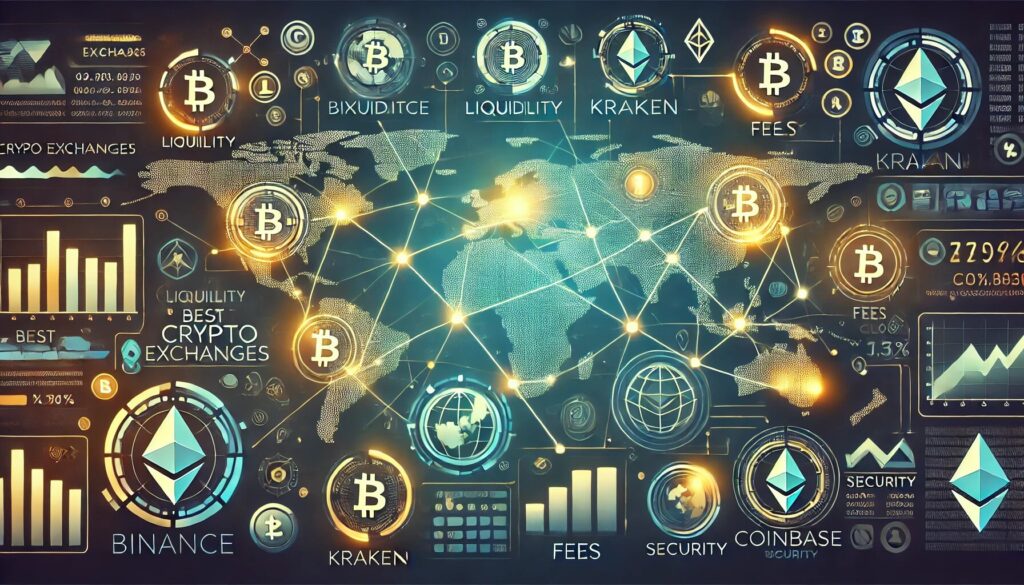
6. Visual Guide to Arbitrage Success
Here’s a simple visual representation of key factors to consider when choosing an exchange for arbitrage:
-
- Liquidity: Higher volumes mean faster trades.2.
- Fees: Lower fees maximize profits.3.
- Security: Ensure funds are protected.4.
- API Support: Critical for automated trades.
To assist beginners and crypto enthusiasts in understanding the fee structures of major cryptocurrency exchanges, we’ve compiled a comparison table of the top 10 exchanges by trading volume, as listed on CoinMarketCap. This table provides an overview of each exchange’s maker and taker fees, as well as supported fiat currencies.
| Exchange | Maker Fee | Taker Fee | Supported Fiat Currencies |
| Binance | 0.10% | 0.10% | USD, EUR, GBP, AUD, BRL, and more |
| Bybit | 0.10% | 0.10% | USD, EUR, GBP, and more |
| Coinbase Exchange | 0.50% | 0.50% | USD, EUR, GBP |
| OKX | 0.08% | 0.10% | AED, ARS, AUD, and more |
| Upbit | 0.25% | 0.25% | KRW |
| Bitget | 0.10% | 0.10% | USD, EUR, GBP, and more |
| Kraken | 0.16% | 0.26% | USD, EUR, GBP, JPY, CAD, and more |
| KuCoin | 0.10% | 0.10% | USD, AED, ARS, and more |
| MEXC | 0.20% | 0.20% | EUR, USD, GBP, and more |
| Bitfinex | 0.10% | 0.20% | USD, EUR, GBP, JPY |
Note: Maker fees are charged when you add liquidity to the order book by placing a limit order below the ticker price for buy orders and above the ticker price for sell orders. Taker fees are charged when you remove liquidity from the order book by placing any order that is executed against an order on the order book.
Understanding these fee structures is crucial for traders, as fees can significantly impact profitability, especially for those engaging in high-frequency trading or arbitrage strategies. It’s advisable to review each exchange’s fee schedule in detail and consider factors such as trading volume discounts, available fiat currencies, and regional availability when choosing an exchange that best suits your trading needs.
Data sourced from CoinMarketCap’s Exchange Rankings. For the most accurate and up-to-date information, please refer to the official websites of the respective exchanges.
Conclusion
Choosing the right crypto exchanges is the foundation of a successful arbitrage strategy. By prioritizing factors like liquidity, fees, security, and regional accessibility, you can maximize your profits while minimizing risks. Combine thorough research with regular monitoring to stay ahead in the ever-changing crypto market. Start by evaluating your current options and take the first step toward optimizing your arbitrage setup!